
A Sermon for Ash Wednesday
Good News on the First Day of Lent

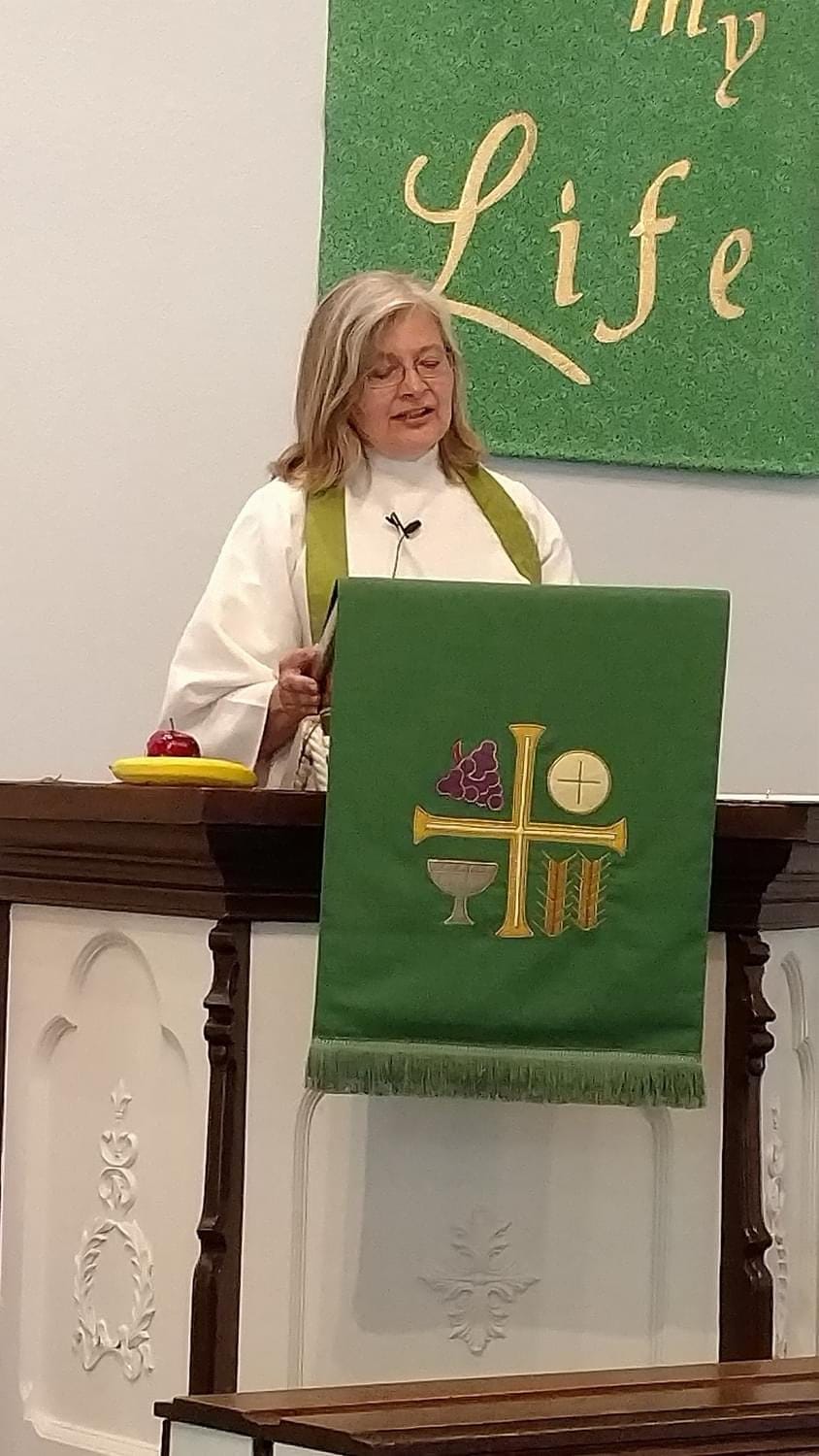
This is the transcript of the Ash Wednesday Sermon I preached last year, the last Ash Wednesday I preached before I retired. I was feeling a bit nostalgic this morning and went looking for my old words. I offer them to you now.
Many years ago I used to make regular visits to a woman who was having treatments for cancer. She wasn’t a member of my congregation, but she lived nearby, and her son had asked us to visit her and bring her communion. So I went, first to her home, and later to an assisted living center when she moved. I still remember that she was lively, well-read, and curious. When she was up for it, she had opinions on the arts, music, current events, everything. At some point her son contacted me to let me know that she had decided to stop her treatments. They were just taking too much out of her. She did not want to do it any more. And of course, we knew what this meant.
I remember the day that I visited her — letting her know that I had heard about her decision. And I thought it was my responsibility to —gently — bring it up — about what it meant for her to stop her treatments. What would — eventually happen. To talk about death. Her death.
There’s not a script for these conversations. I remember walking into a nursing home room one day, and the woman I met just blurted out, “I’m ready.” She wanted me to know that she was prepared for what came next. I’ve talked to people who wanted to know what heaven was like. I remember one woman who, when she learned that death was near, said, “Oh, now I can have communion every day!” She was so at ease with her dying that I was a little envious.
But on this day, I remember that this woman did not want to talk about it.
“Remember that you are dust, and to dust you shall return.” On this Ash Wednesday — the first day of Lent — that is the basic message. We read from the gospel of Matthew — about the disciplines of prayer, fasting and giving — we read from 2nd Corinthians that NOW is the acceptable time to turn to God, and from Isaiah about about acknowledging corporate sins and discovering a fast that becomes a positive force for justice.
All of these we hear on this first day of Lent — but the basic message of why we gather — and what we do — is simply this: We acknowledge the reality of death.
“Remember that you are dust, and to dust you shall return.”
I will say — that on some level this message is not a positive one. It’s not — what’s the word we use now? — uplifting.
There’s a line in the movie “Moonstruck” — which I just watched again — where Rose Castorini — played by Olympia Dukakis — looks into her husband’s eyes) — and she tells him, “You’re gonna die, just like everyone else.” And he looks at her, and says, “thank you.”, and you know he means that sarcastically, like, “Yeah, thanks a lot. As if I didn’t already know that.”
There’s a level on which I understand why people might not want to come out to an Ash Wednesday service. There are a lot of fun and life affirming things you can do instead of acknowledging that you are a sinner, and that you are going to die someday, “just like everyone else.” And yet — it’s also true that when I go over to the school to offer Ashes on the morning of Ash Wednesday, there are always some people who are eager to receive them, and even say “thank you.” There are even children who are eager to have their foreheads “dusted” every year. There are people who will call the church, asking about whether we are going to have imposition of ashes for Ash Wednesday, because they are looking for a place to go and hear those words and have the ashen cross marked on their foreheads.
“Remember that you are dust, and to dust you shall return.”
It makes me wonder — what is it about these words that some of us actually hunger to hear them? What is good news about admitting the ways in which we have fallen short, screwed up, failed each other? What could possibly be comforting about acknowledging that you are are going to die, just like everybody else?
Well, for one thing — it’s the truth. It’s the truth for us as individuals, in our family lives, and it’s the truth for us as communities and nations. There is something freeing about admitting the truth. As well, let’s be honest — the illusion that if we just work hard enough, learn enough, organize enough, even pray enough, we can fix the world and maybe even beat death — is a heavy load to carry. It’s a relief sometimes to admit our imperfection, our failure, our mortality. To rest in the knowledge that we are creatures, not gods.
We do have our sphere of responsibility — caring for the earth and one another — doing justice, loving kindness and walking humbly — but we are not responsible for everything. We are only human.
“Remember that you are dust, and to dust you shall return.”
There’s a scene at the end of the movie I mentioned earlier ‘Moonstruck.’ It’s a movie —really — about the craziness of love, and the imperfection of our human life — and in this scene — at the end of the movie — the family is sitting at the breakfast table — Rose Castorini — who knows her husband has been having an affair and believes it is because he is afraid of death — asks him — in front of everyone, “Have I been a good wife?”. He nods. She says, “I want you to give her up.” He stands up, pounds his fist on the table, and then just says, “Okay.” And then he sits back down and tells her that there comes a time in a man’s life when he realizes that his life has been built on nothing.
And she looks at him and says to him, fiercely, “Your life is not built on nothing.”
“Te amo.” “I love you.”
So today we hear these words of judgment and compassion — Remember — that you are dust — and to dust you shall return.” You are going to die — just like everyone else. But our lives are NOT built on nothing. We are made in the image of God, redeemed by the cross of Christ.
Te amo, God tells us. I love you. Today — and every day.
When we die, and as we live.
This is the first day of Lent. The end is Easter.
AMEN
I love the Moonstruck reference.
Thanks for this timely message that the truth still sets us free no matter how much we run from it.