
Dirt, Water, and Miracles
Not a sermon, on John 9:1-41

I was sitting at an oblong table covered with a green plastic tablecloth (it is St. Patrick’s Day this month, after all). I had moved a centerpiece with shamrocks to another table and set out communion ware, along with two battery operated votive candles. I put on the colorful mini-stole that I bought at a worship conference two summers ago, not because it’s necessary to wear it, but because I like it. Also, it has green in it.
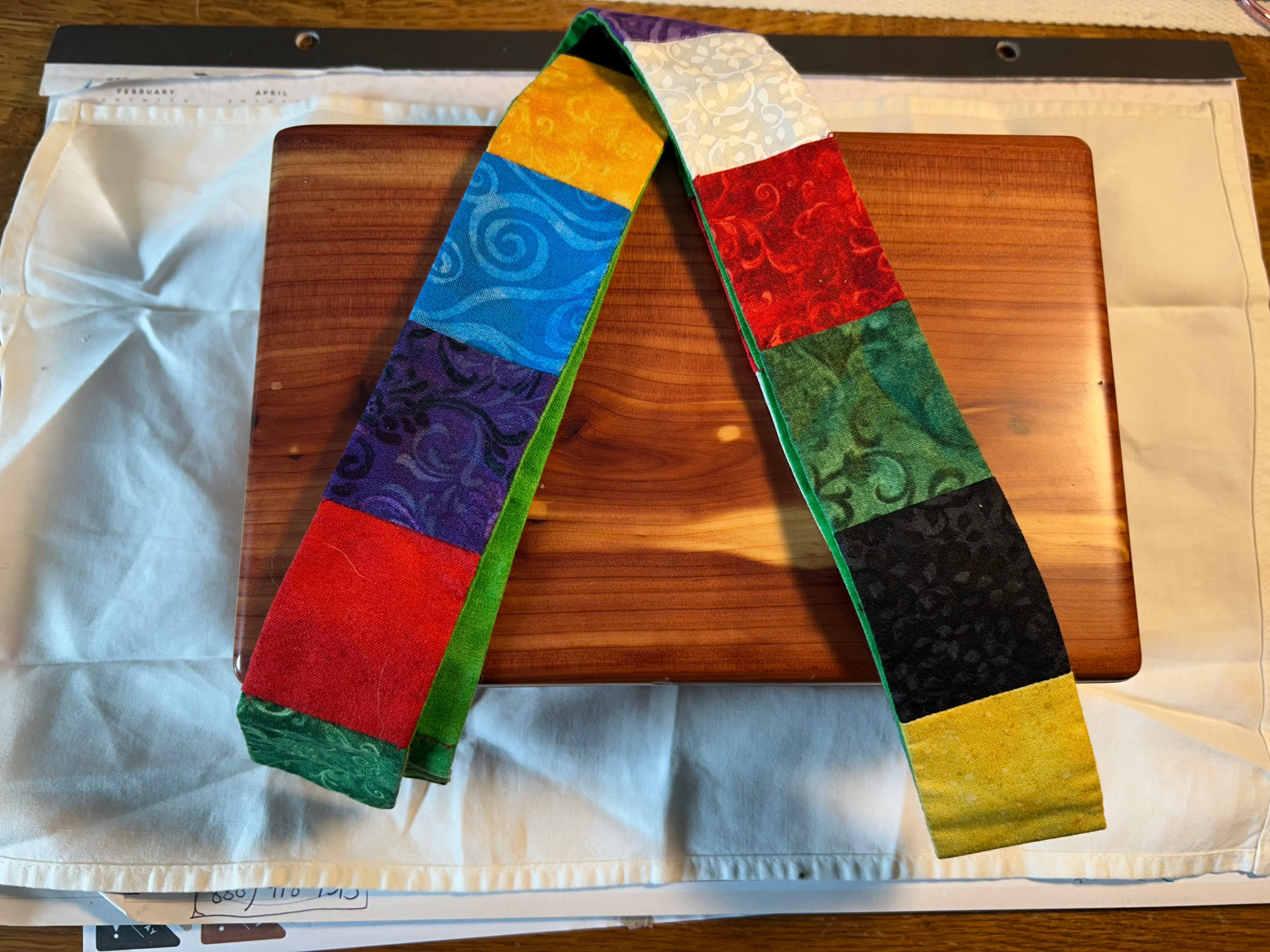
Before I had arrived at the assisted living center, I considered what I would say at the service that morning. I always say “it’s not a sermon”, I just “riff” a little on the assigned reading, which in theory I have thought about before the service. I love the gospels for this time of year, all of the conversations and encounters Jesus has: Nicodemus, the Woman at the Well, the Man Born Blind, and Lazarus and his sisters. Just before arriving I decided to read portions of the story of the Man Born Blind: Just his two encounters with Jesus.
All of the regulars have shown up. I asked them all how they were. They are all fine, or at least “so-so”, although one man answered in German. He is proud of his German heritage, and he is trying in vain to get me to learn a few words. I pleaded Scandinavian.
We sat at the table, as if we were simply sharing a meal with conversation, which is actually, I think, what we are doing. Every time. I read those two portions of the gospel. I didn’t want to get into all of the controversy about the healing, at least not on this day.
“I have been a pastor for a long time, and a Christian for even longer, but I’m not sure when I first noticed something about this story,” I said. “I noticed that when Jesus healed the blind man, and he saw — by the time he came back from the pool of Siloam — Jesus was gone. So he saw, but he did not see Jesus.”
So, I said, I realized that there are really two miracles (or as John calls them, signs) in this story. The first miracle is the blind man receiving his sight. The second one is the blind man seeing Jesus.
I asked them, “which one do you think was the greater miracle?”
I suppose it was a rhetorical question, because everyone agreed the second miracle was the greater of the two.
I was going to end there, but for some reason, I decided to go on. I told them about a container of dirt which sat on my desk in my office for many years. In fact, I think I only got rid of the box of dirt finally when I retired. The container of dirt had been sitting there since I had a children’s message one Sunday in Lent. It was about the man born blind, and how Jesus took dirt and water and mixed it and put it on the man’s eyes. I showed the children the dirt and asked what we needed dirt for, and of course they could think of lots of things. Then I showed them the water, and we could think of a lot of uses for water too. Then I mixed them together and asked them what it was. I told them Jesus put this mud on the man’s eyes.
One little boy said, “Ewww!”
As I was telling this little story about the water and the dirt, I was looking at communion, the little cup of wine, the small wafers.
Jesus used ordinary things to make miracles. Sometimes just a word. Sometimes a touch. Sometimes dirt and water, making mud.
Ordinary things. Bread and wine. And somehow a miracle, a sign. We see. We see ourselves, in all of our brokenness and beauty. And we see Jesus, in his suffering and love. Just a glimpse, really. A moment that might make us gasp, and make us grateful, and make us humble. (After all, we too are made of dirt, and water, and breath.)
This is not a sermon.
It’s just a few words, thrown together with dirt, and water, with bread and wine, given for you.
A miracle.
This is so beautifully offered... so much of our life of faith is in the most ordinary, potentially looked over things, yet God is resplendent in them. Thank you.
Diane what you name here is one of the quiet theological movements in John’s Gospel: the difference between receiving sight and recognizing the One who gives it. The healing at the pool restores the man’s eyes; the later encounter restores his understanding. Many of us discover that faith unfolds in that same sequence: the gift first, then the recognition of its source. Your reflection on dirt, water, bread, and wine brings the point home with beautiful simplicity; God often chooses ordinary materials to reveal extraordinary grace. Thank you for offering such a gentle meditation that reminds readers how the most common elements of life can become signs through which we learn to see Christ.