
Wednesday in Holy Week
Anointed for Burial/Mark 14:3-9

Last year when I retired, I made a couple of perhaps extravagant purchases. One of them was a new and more expensive communion kit, and another was a Holy Week/Easter book and “Nesting Doll” Egg for children. The pictures on the egg bore a symbol for each day of Holy Week, starting with Palm Sunday. Last year, I took the egg with me to Minnesota. That was my Holy Week discipline. On Sunday, there was a Palm For Palm Sunday. On Monday, the image was for the temple that Jesus entered, and drove out the money-changers. On Tuesday there was an image of a heart, to remind us that between Palm Sunday and his arrest, Jesus was teaching in the temple, and that one of his teachings was the greatest commandment, “Love God with all your heart, with all your soul, and with all your mind, and with all your strength, and to love your neighbor as yourself.”

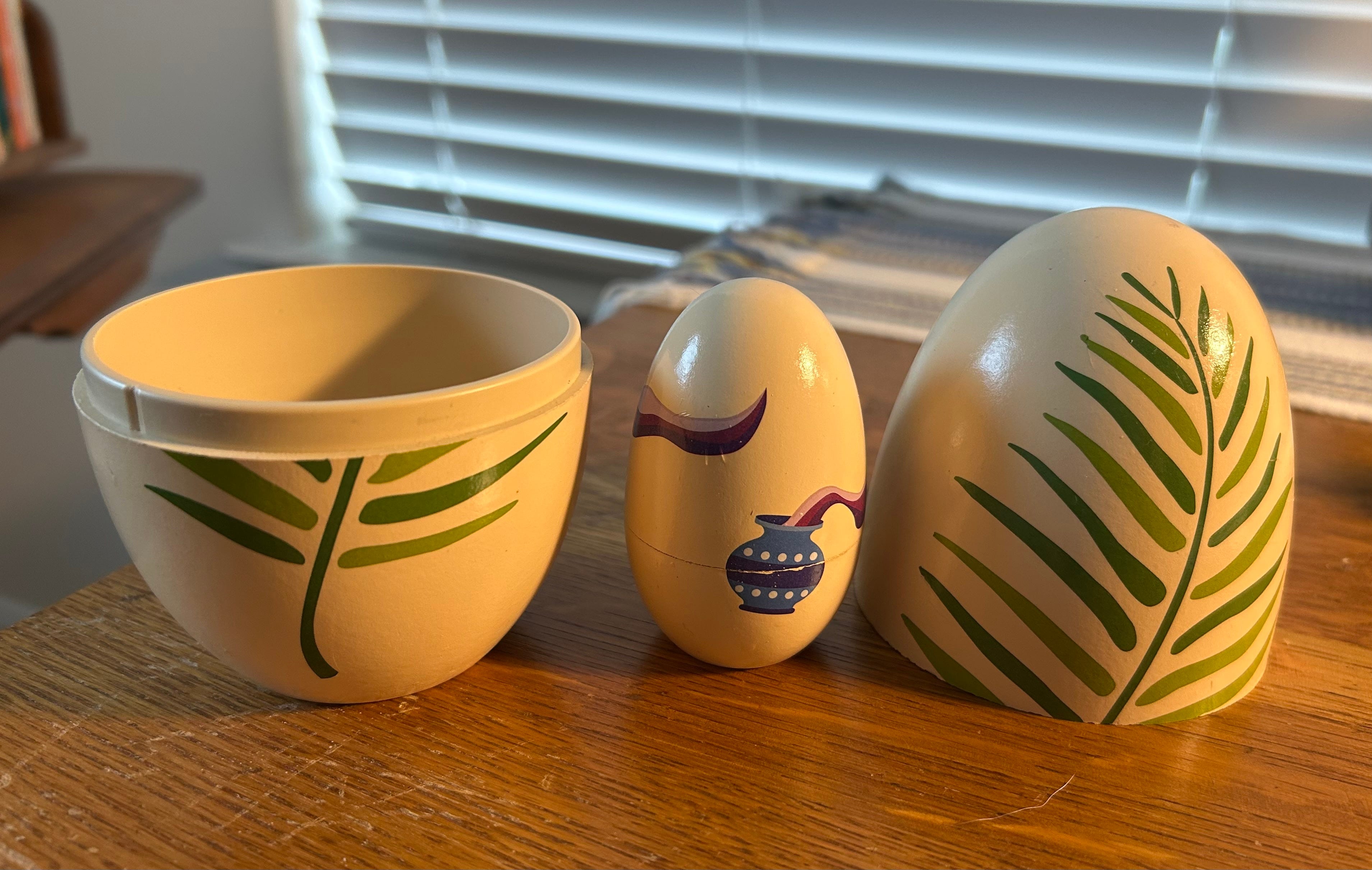
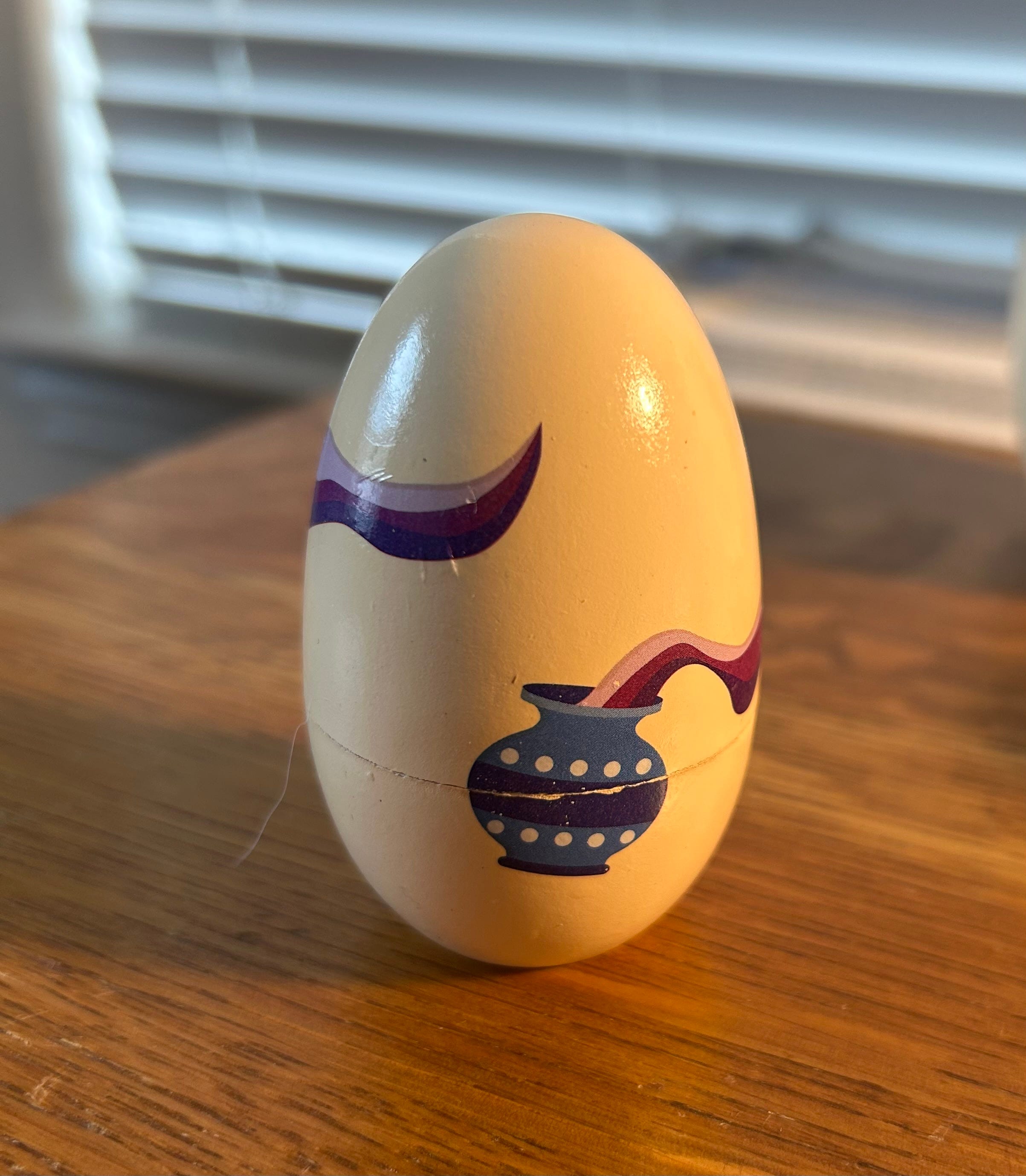
Today’s image is a jar, with oil pouring out. The story is from Mark 14, the nameless woman who anointed Jesus. (I know that in John, the woman is Mary of Bethany, but in Matthew and Mark, her name is not given.
Long ago, I wrote a series of monologues for a Lenten series called: “Unnamed Witnesses on the Way to the Cross. Every Wednesday, someone from my congregation told one of these stories. We paired each monologue with a modern testimony from someone in our congregation.
A few years ago, a couple of congregations here in Texas used my monologues for their Lenten worship. I especially enjoyed learning from one of the pastors about how her congregation responded, and especially, how those who learned and gave the monologues responded.
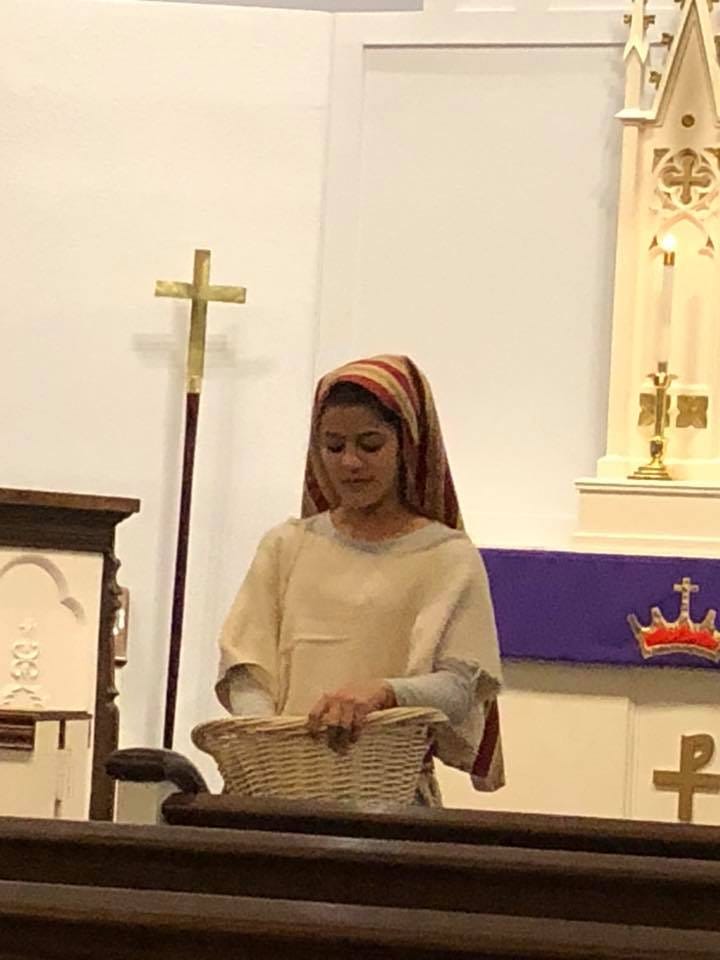
The first monologue was about the woman who anointed Jesus. This is her story.
“I suppose it was a foolish thing to do. At least, that’s what all of Jesus’ friends kept telling me. “You stupid woman!” they said, when they saw me with the expensive perfume. “Think about what we could have used that money for! We cold have given it to the poor.” Huh – think about what I could have used the money for. It cost me a year’s wages! I cold have gotten new clothes – expensive dinners – a better place to live – even perfume for myself. So many ways I could have used that money. It’s easy for Jesus’ friends to judge me – but I didn’t see any of them using a whole year’s salary for the poor, either. I wanted to show Jesus how much I loved him, how much I honored him – what I owed him for what he had given me. I wanted to anoint his head like someone would anoint a person of great wealth and honor. After all, that’s what he deserved – for all the ways he helped people, for healing people, for including even forgotten people, even sinners, among his friends. You don’t know what that means – to be included, to be considered important. But … I suppose it was a foolish thing to do. At the time, I thought even Jesus said so. He did come to my defense; he told everyone to leave me alone. But then he said, “She’s anointing me for my burial.” And that’s not what I was doing! I didn’t want him to die. I wasn’t thinking about death. At the time, it seemed like an insult to me. Why would he bring up death at a time like this? Here I was, trying to show my devotion, and he’s talking about death. It made me thin that my gift was an even bigger waste than Jesus’ friends did. And then – the final insult – he said that for years to come, people would talk about me and about what I did. They would talk about how I anointed a body for burial before he was dead! That was embarrassing.
“It turns out, though, that most people don’t even remember my name. Thank goodness for that, anyway.
“In the end, though, it turned out that he was right. I was anointing him for burial, in a way. I still have a hard time thinking of it that way, exactly. I didn’t know that he was going to die. I was anointing him as a way to honor him. But, without meaning to, I was also anointing him for burial. I suppose that happens more often than we like to think. We do something good – almost without meaning to. If I had known he was going to die, maybe I wouldn’t have done it. I think about that, sometimes. And I still think, sometimes, it was a foolish thing to do. It was really hard on me, spending all my wages like that. I didn’t know how I was going to get along for awhile. I didn’t know how I was going to eat. I had to depend on other people – and I wasn’t sure they were dependable. You can understand, maybe. Still, I’m glad I did it. I’m glad I got the opportunity to show Jesus my gratitude and love before he died. I’m glad that I anointed him before his burial.
“I still have a hard time believing all the things that happened after that. I have nightmares when I remember how they took him away, put him on trial, beat him and crucified him. Some of us did things then that we weren’t proud of later. Some of us ran away, some of us denied knowing him, one of us even betrayed him. We were afraid. And there were people who kept trying to tell us that his life was a waste, because of the way he died…. Just like my perfume, only good to be buried in.”
She did not waste her perfume and he did not waste his life, because both were given out of love. This is the mystery of God.
“Christianity preaches the infinite worth of that which is seemingly worthless and the infinite worthlessness of what which is seemingly so valued.” — Dietrich Bonhoeffer
The Bonhoeffer quote is a powerful one for me that sums up the power of Christ’s love freely poured out for us all. Thanks
This is a hard blog to read & just as hard to understand. I have heard this reading before, but it is still hard to understand: someone spending all the money they have for oil to annoint Jesus. Their intention was not to annoint him for burial but to thank him for what he had done for them? I am not sure I could have done what she did. I am too practical to use all my money for such a thing & then not have enough money to buy food & other necessities. Am I missing the point here?